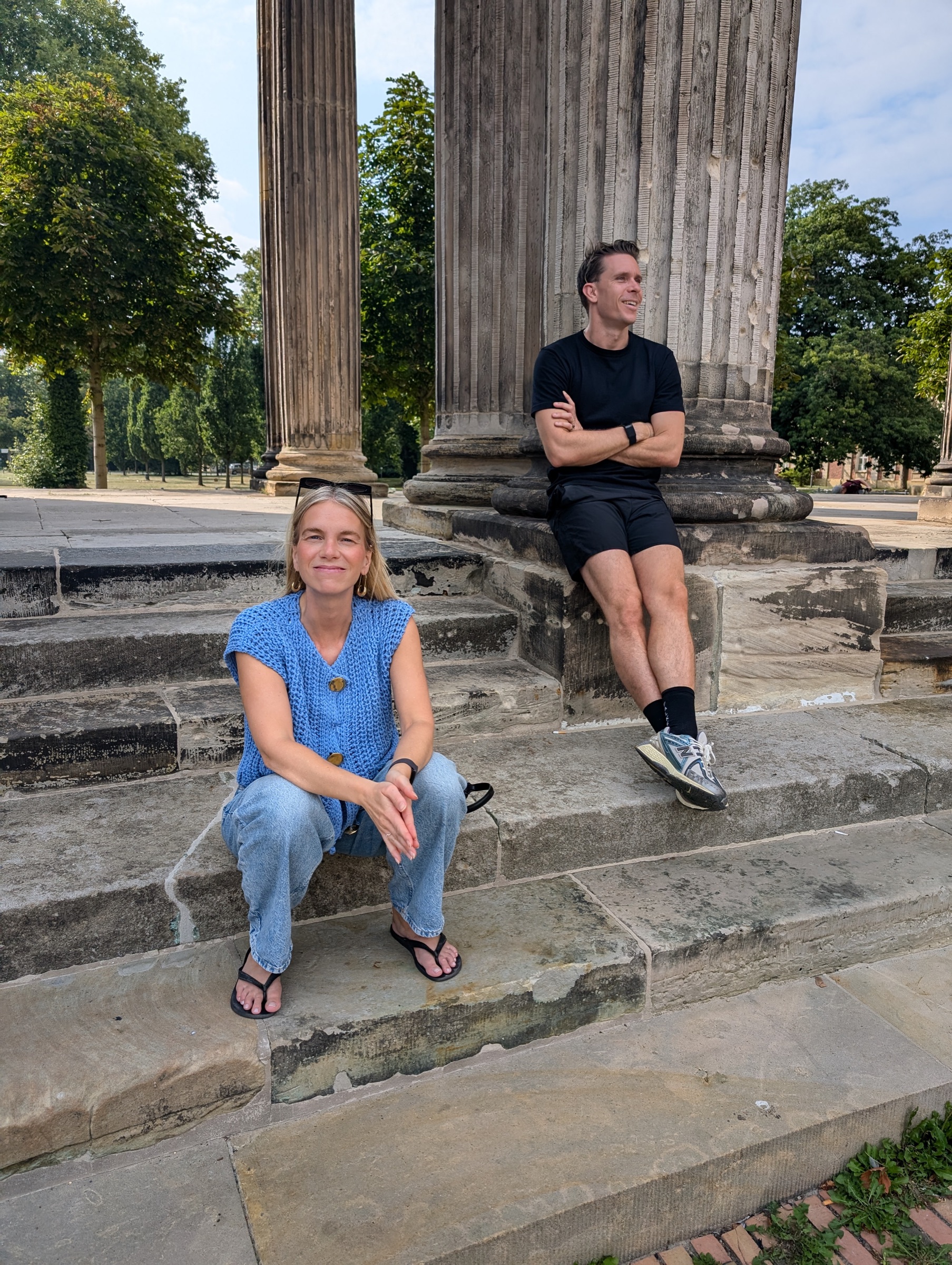
Copenhagen · Berlin · Cape Town
We first came to Cape Town as students—but what kept us coming back was everything we built here. Over the past decade, we’ve been building companies and lives across three cities: Copenhagen, Berlin, and Cape Town. Work brought us back again and again. Friendships made us stay. The Danish design spirit we grew up with during our time in Copenhagen has always run through our lives—but Kira’s years in Brazil pulled us somewhere else, toward the warm, generous geometry of Brazilian modernism. Cape Town’s architecture and art scene pulled us in deeper each time.
Building companies in South Africa made us want to do more than just work here. It drew us into the community. We wanted to be part of moving things forward, to show up graciously and consistently—not just dive in and out. Living between these worlds gave us a network of friends, collaborators, and creatives across Cape Town who shared our obsession with design, food, and the outdoors. Over time, these connections became the foundation for everything that followed.
Through all those years, one frustration kept returning: we could never find a place to stay that felt like a home instead of a rental unit. Rentals were either soulless rooms optimised for maximum revenue per square metre, or beautiful but impractical spaces in wind-battered, tourist-heavy areas. Nothing matched the Cape Town we knew — quiet streets, world-class food around the corner, beaches a walk away, no wind.
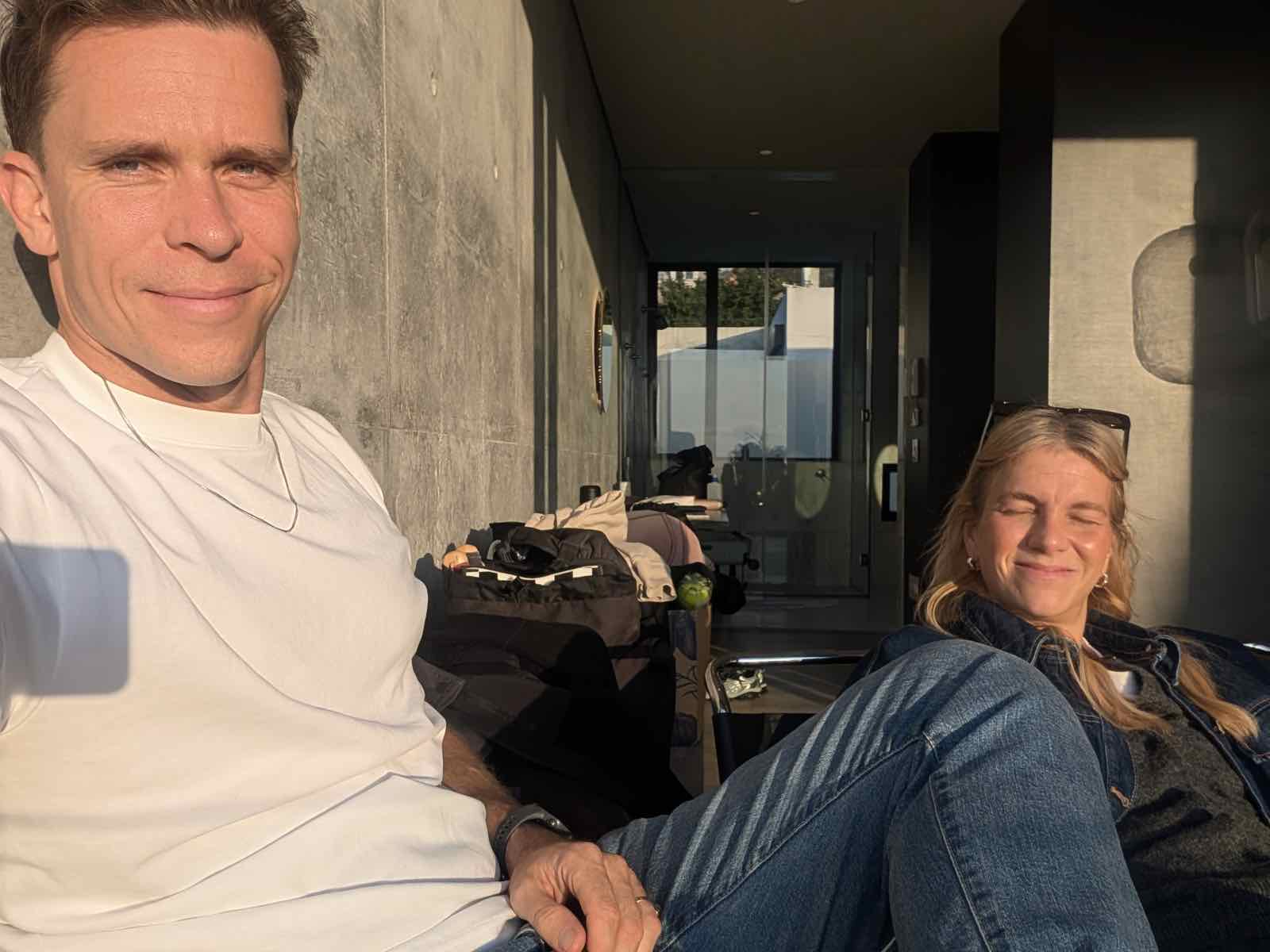
Together with architect Kim Benatar of Three14 and interior designer Marlon Leggat 📷—both internationally published, with work featured in Elle Decoration and Aspire—we set out to build the kind of place we’d always wished we could check into. A home away from home.
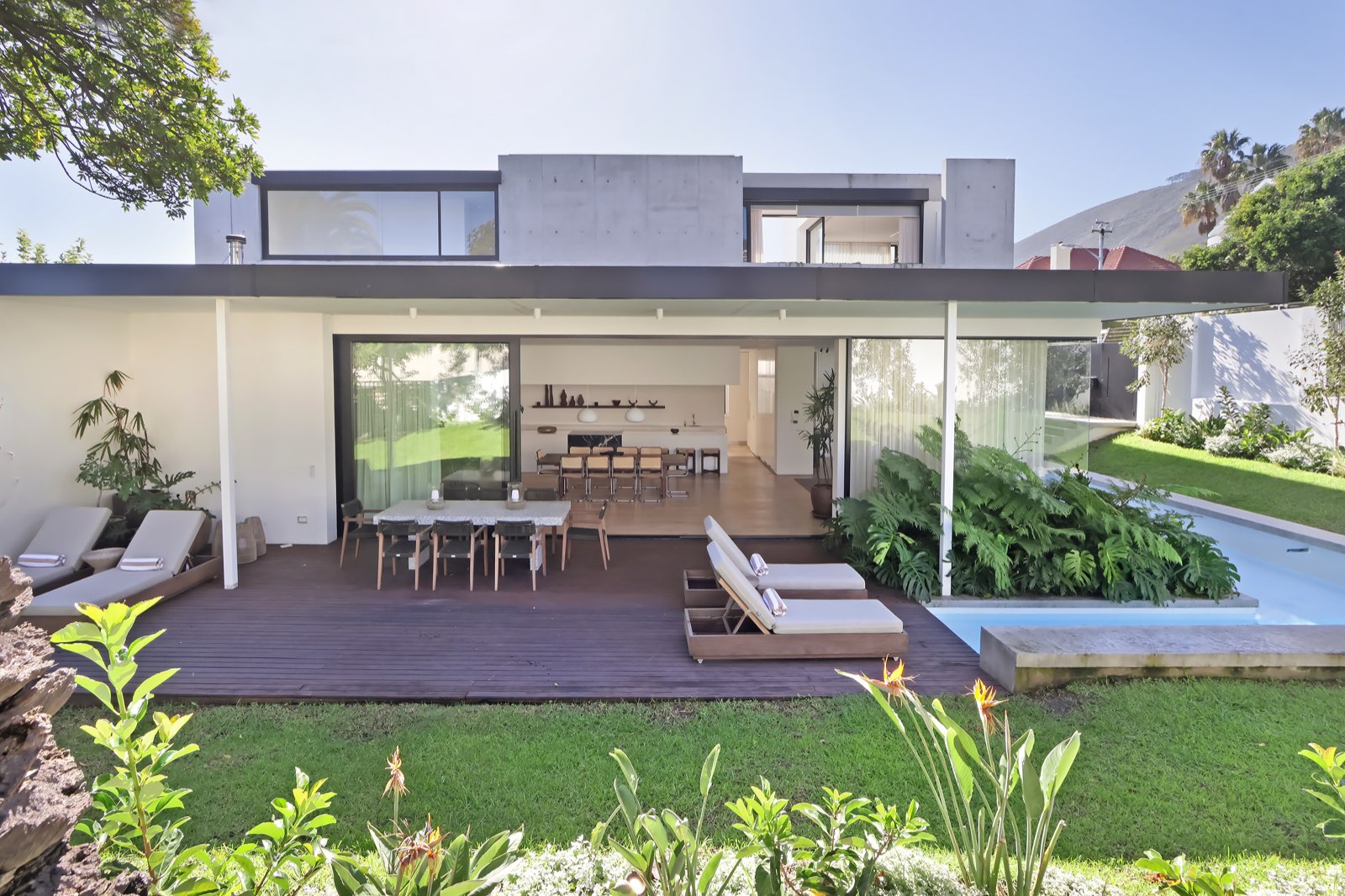
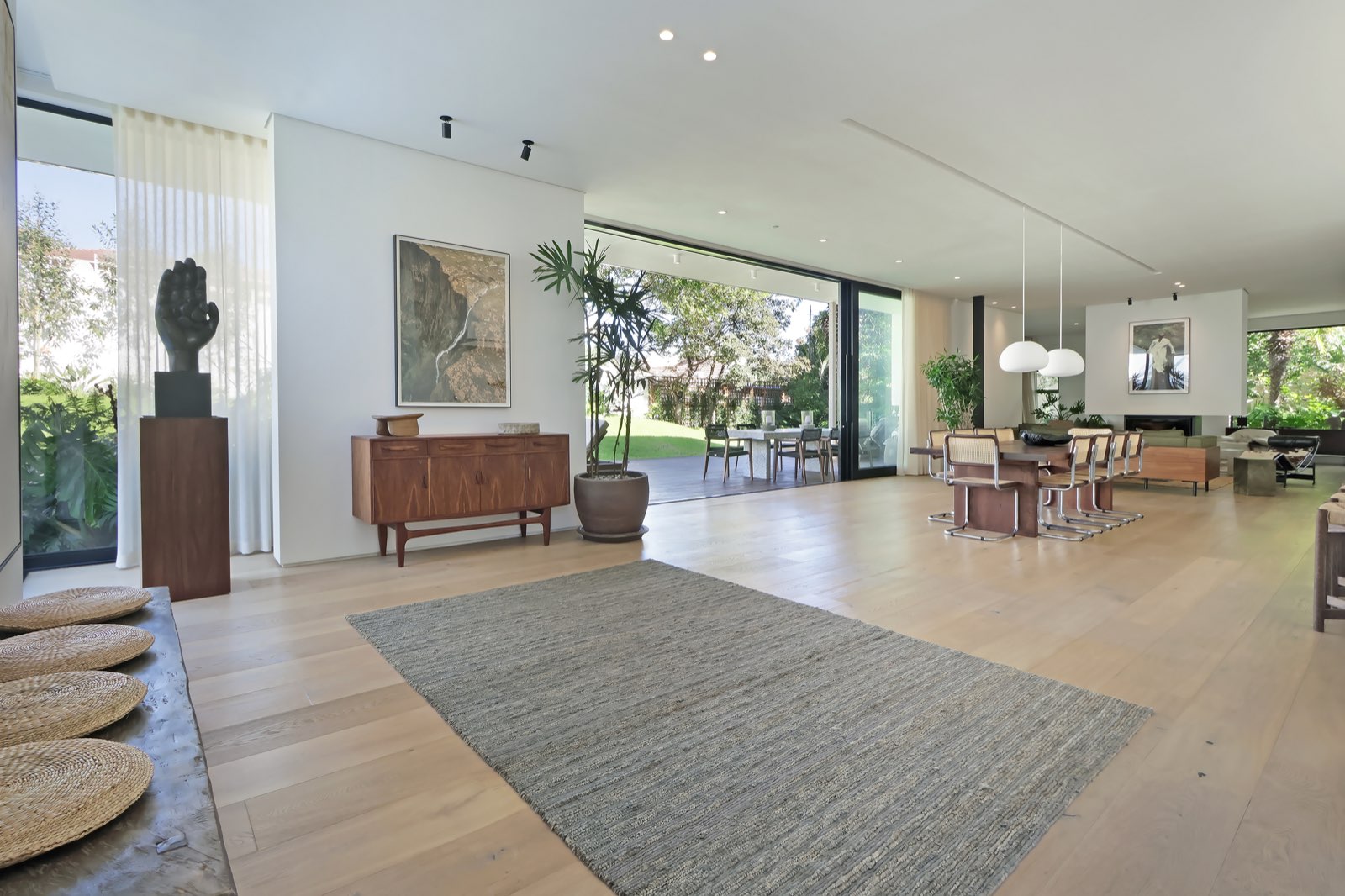
The design language is unmistakably Brazilian modernism — Kira’s years in Brazil pulled us there: warm concrete, generous timber, spaces that open fully to the garden. Scandinavian simplicity runs underneath — clean lines, honest materials, nothing superfluous. A conscious break from where we came, informed by where we’d lived.
Our friends across Cape Town pulled us through it. Every piece — the furniture, the art, the details — was locally sourced and made by the neighbours, friends, and makers we’d come to know over a decade in the city. The result is a place shaped by Cape Town and its people.
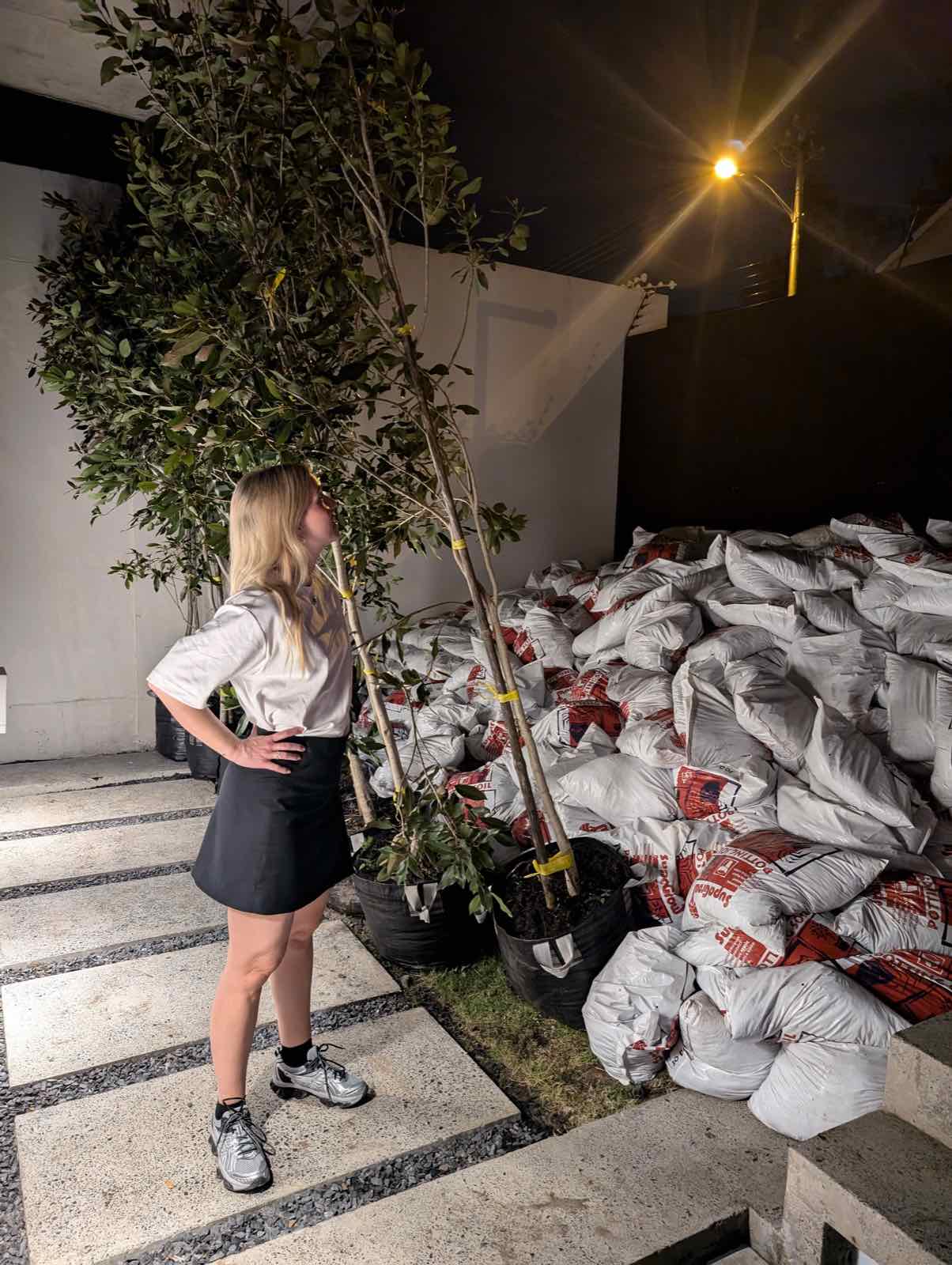
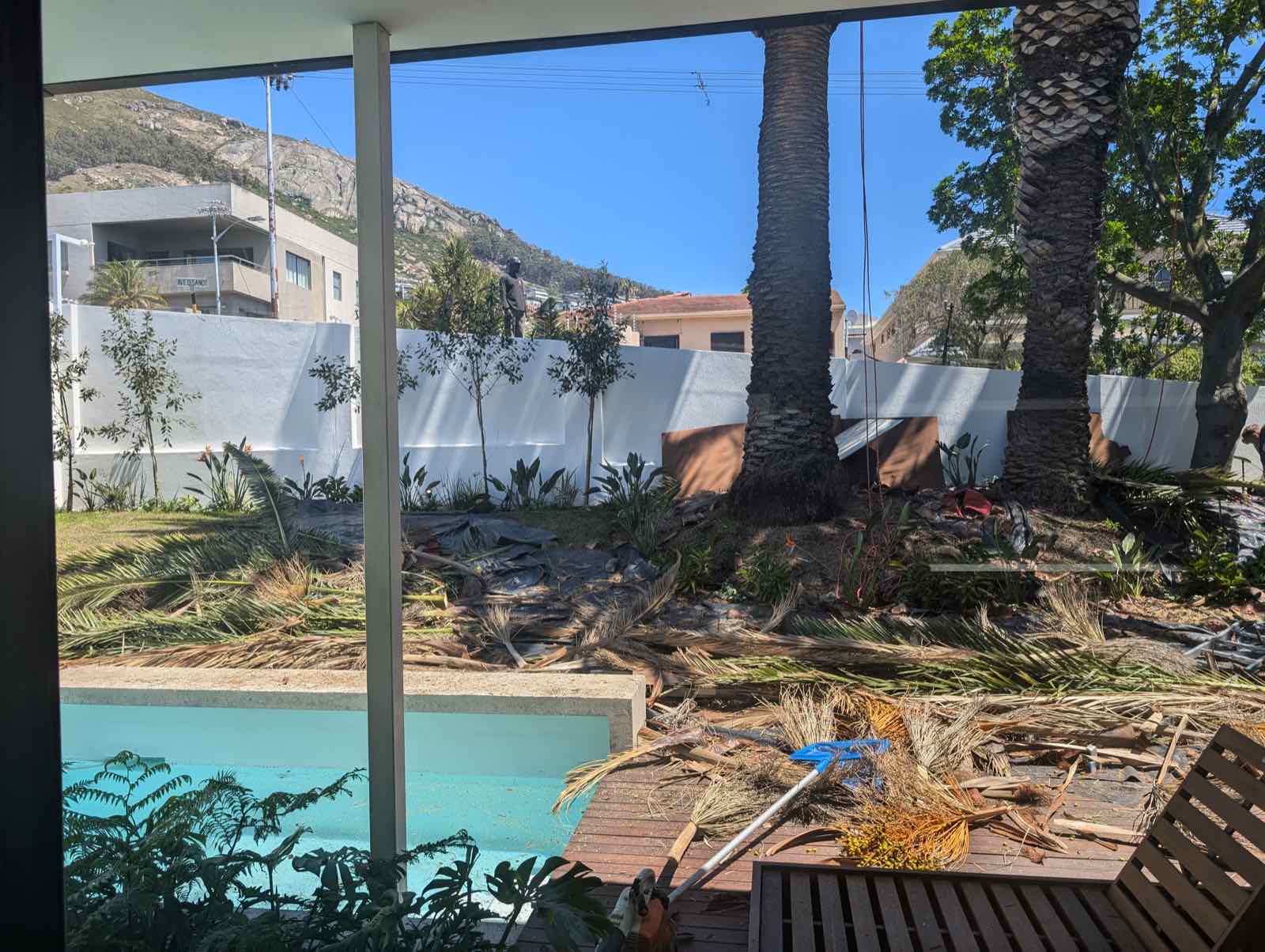
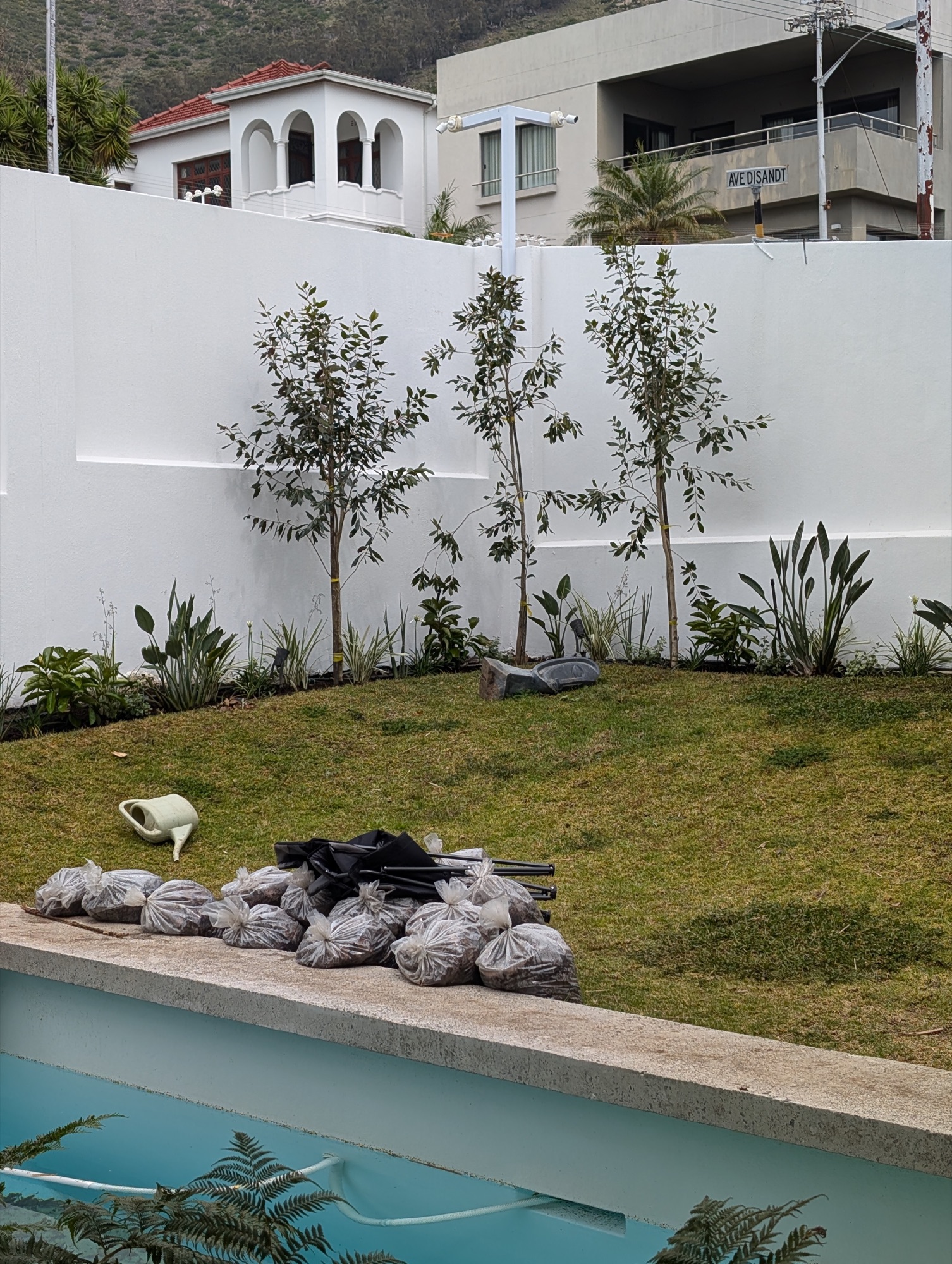
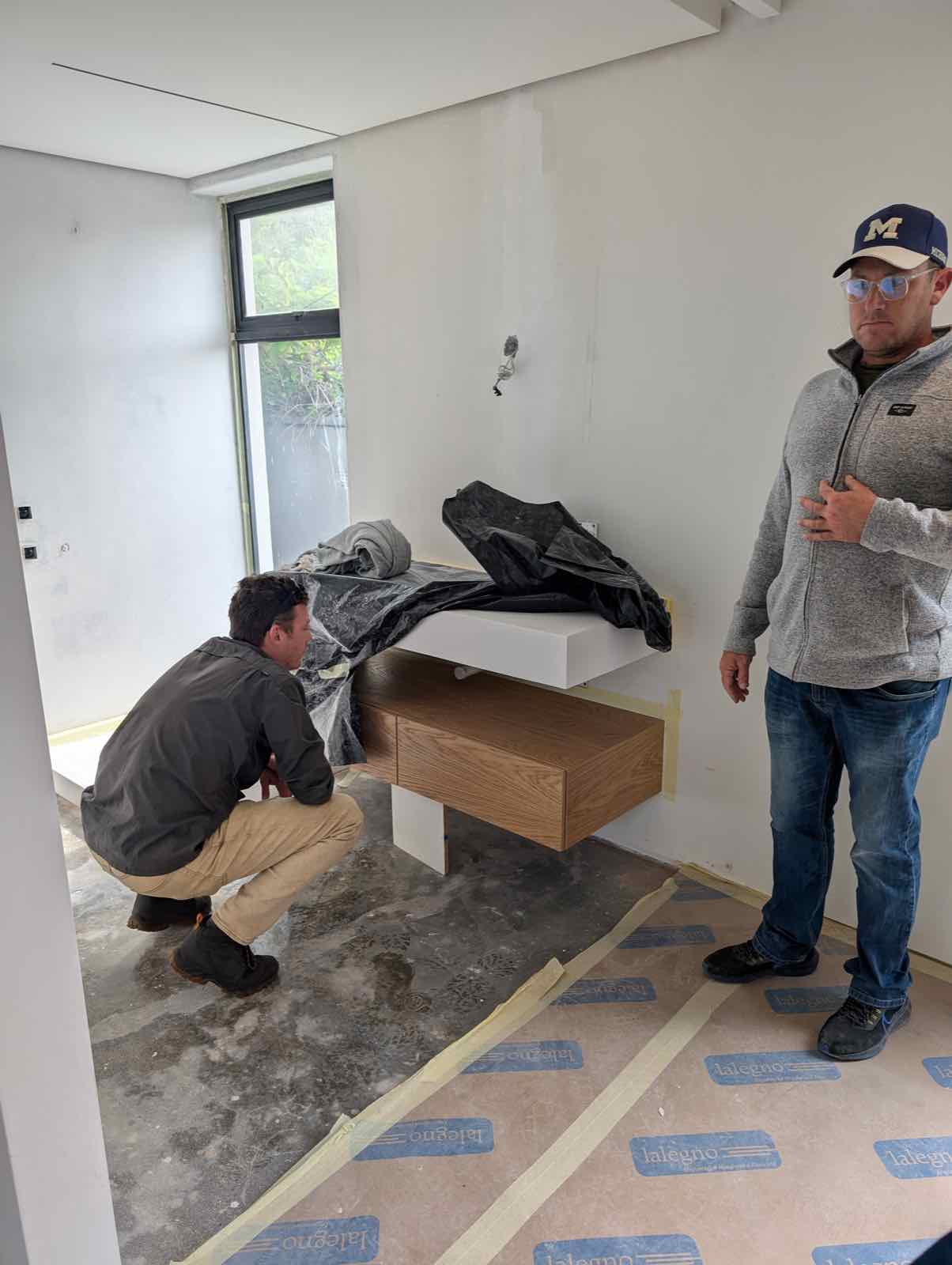
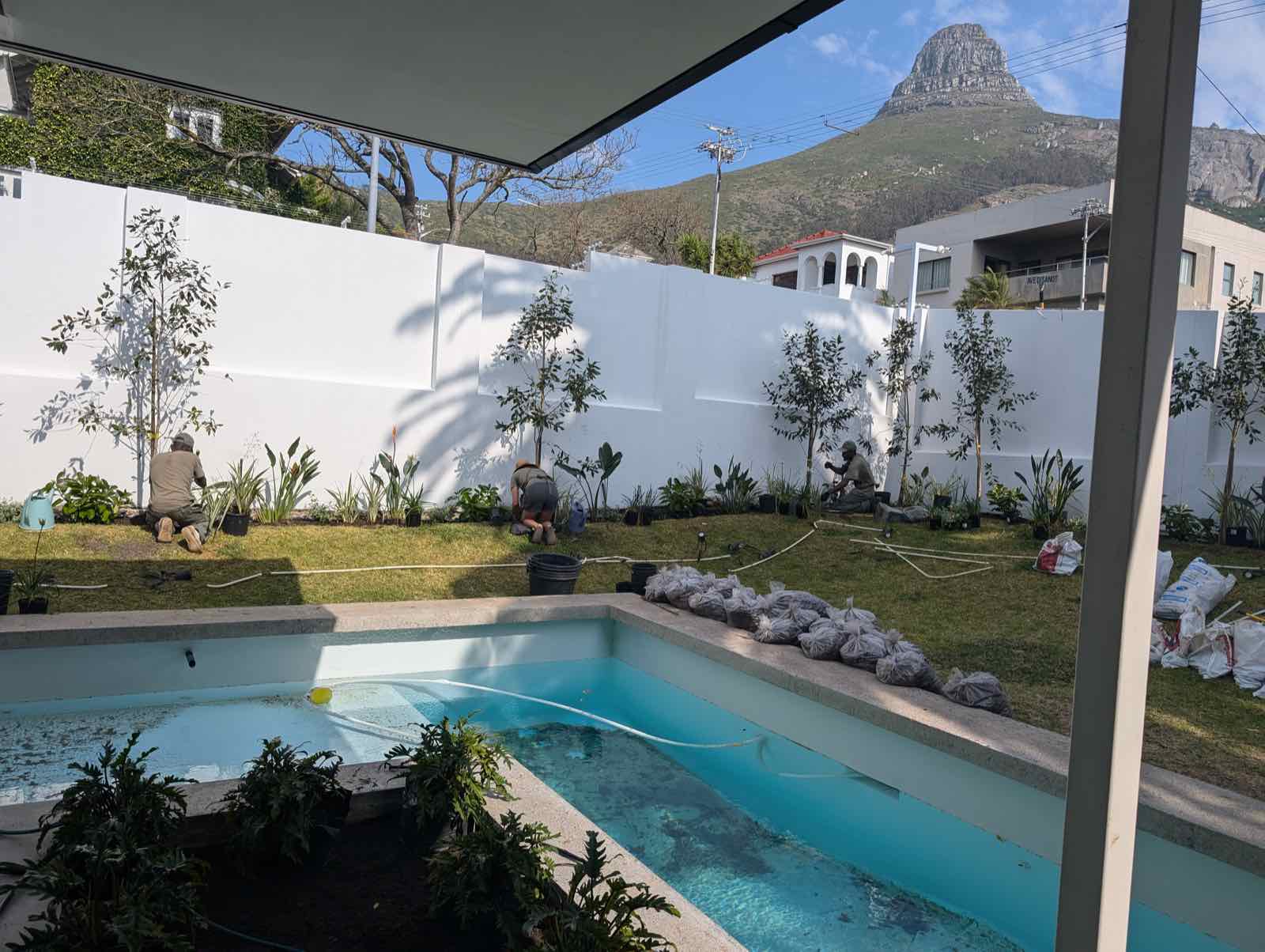
Before there was a garden, there was rubble. Before there were finished floors, there was tape, cardboard, and footprints. What you see in the photos today—the lush green, the quiet rooms, the pool that looks like it’s always been there—none of it was inevitable. It came out of months of mess.
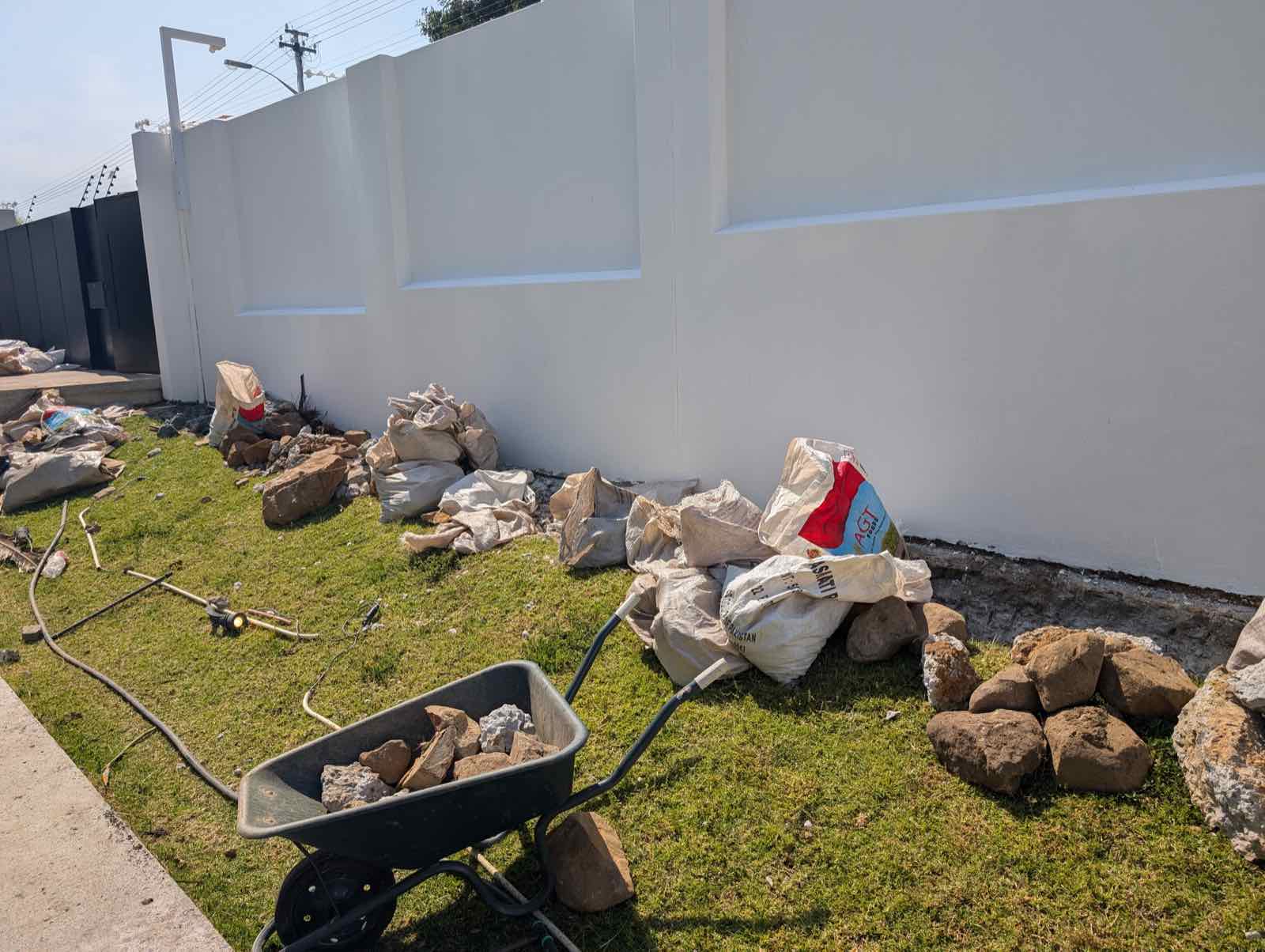
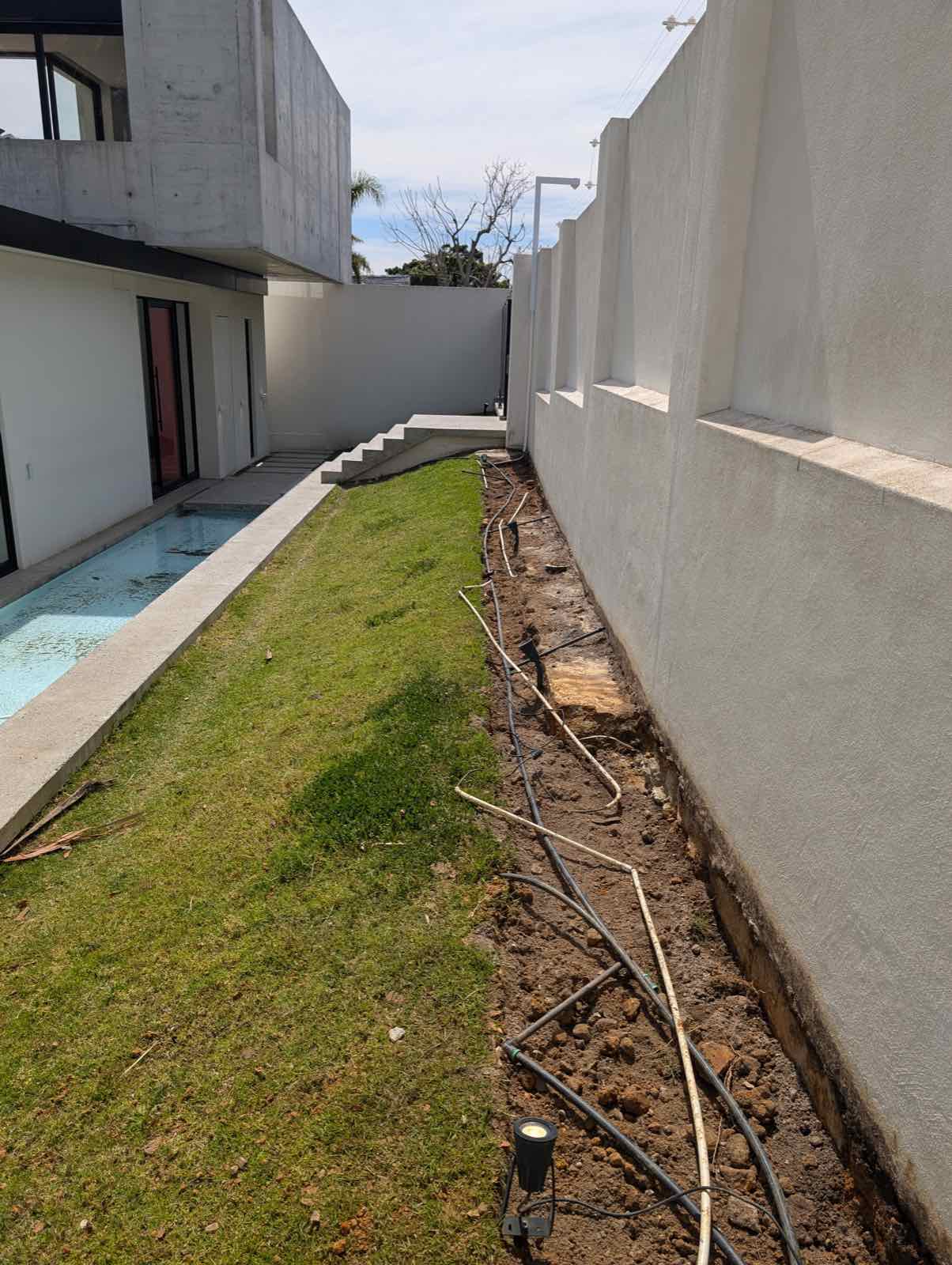
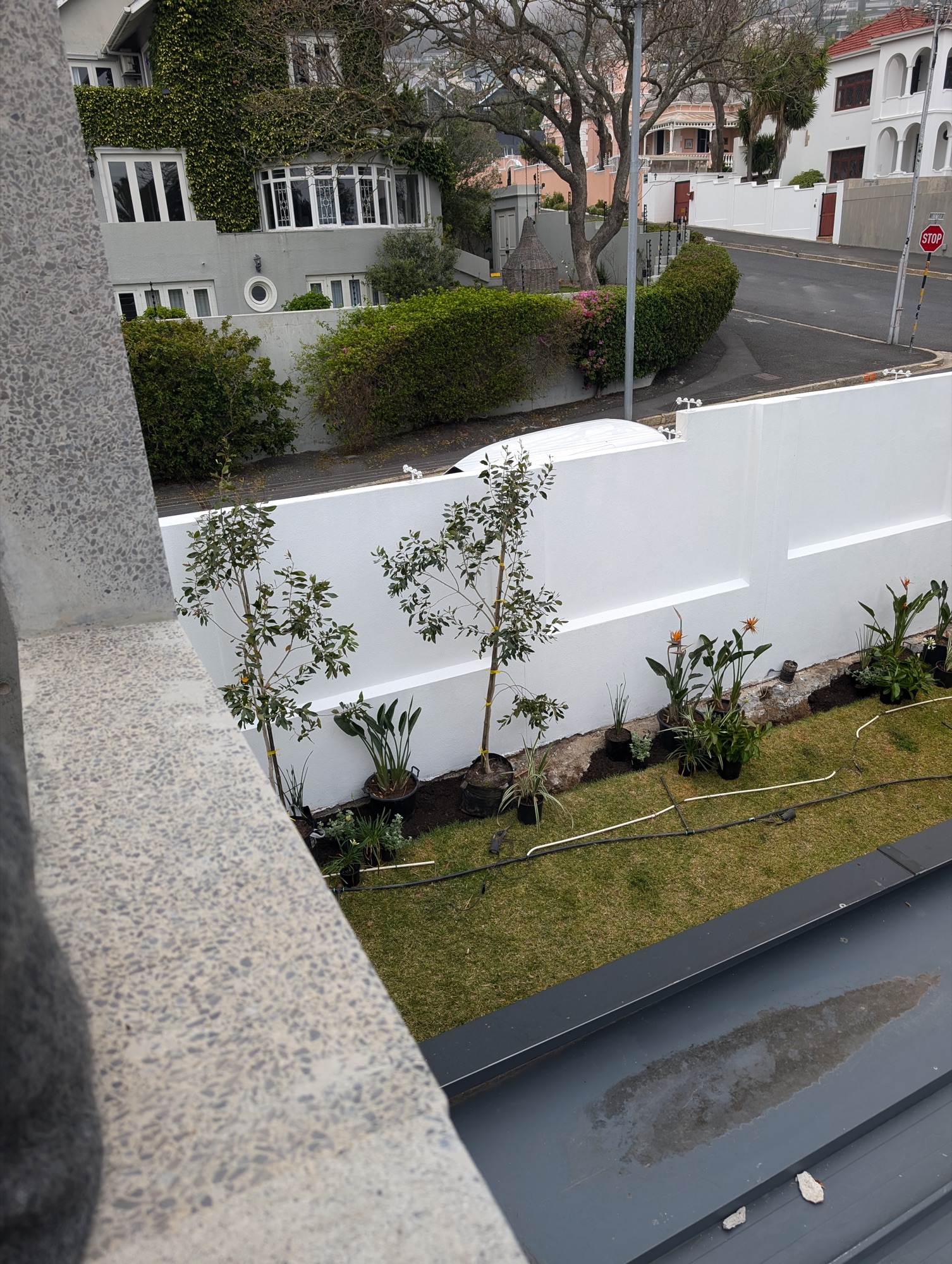
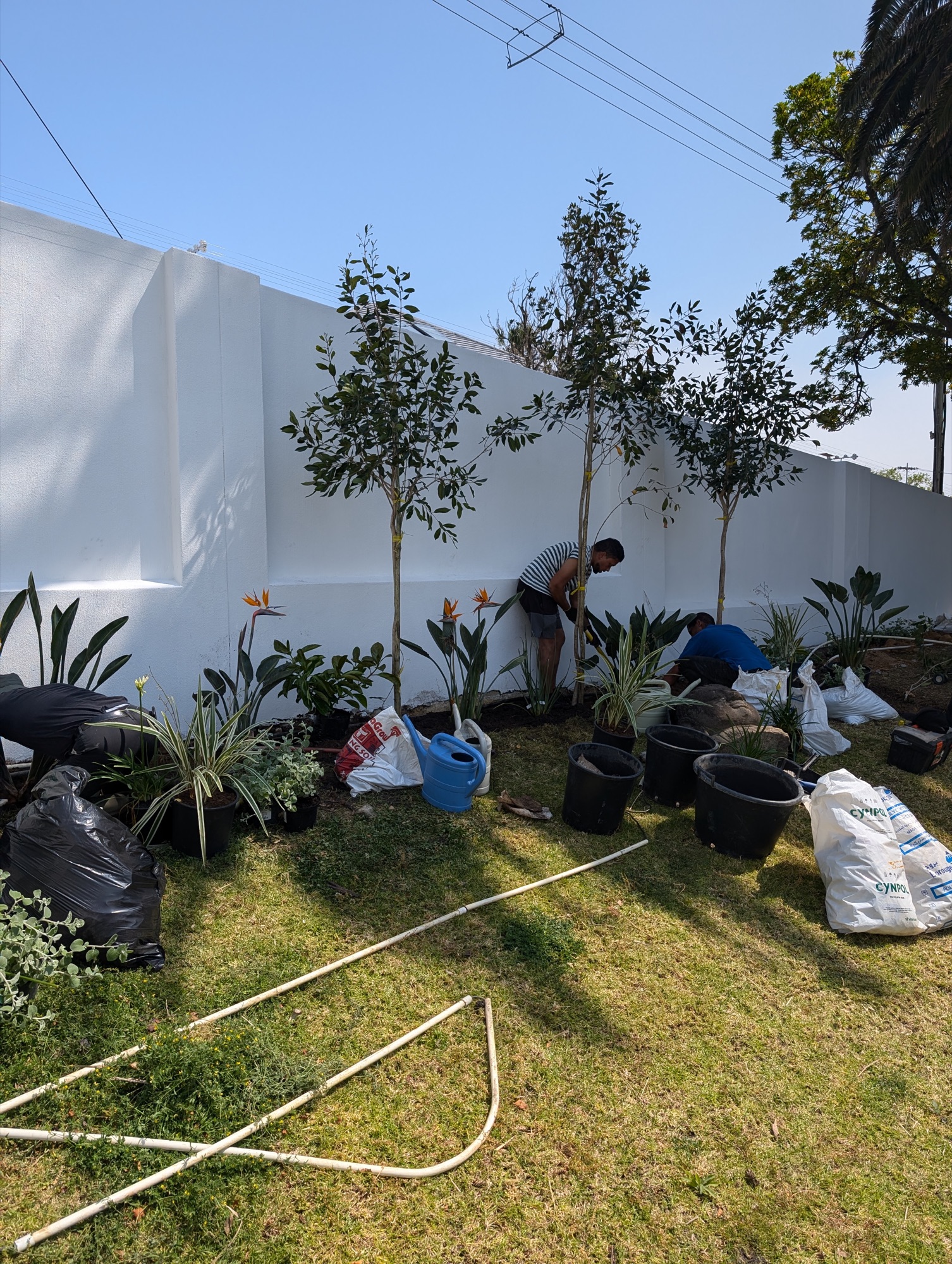
The garden was our biggest labour of love. Where there was bare lawn and white walls, we planted trees, tropical plants, and birds of paradise. We wanted every room to open onto green—and for the garden to feel like it had always been there. It took time, patience, a very patient crew, and a lot of soil bags by the pool.
Inside was no different. Walls were bare plaster. Floors were covered in tape and cardboard. Furniture arrived one piece at a time, in plastic wrap, and sat in the middle of empty rooms while we figured out where it wanted to live.
Oak floors were laid by hand. Rugs were chosen, tested, and sometimes swapped three times. The floating staircase, the fireplace, the floor-to-ceiling glass—all designed to blur the line between inside and out. We chose furniture you actually want to sit in, art locally sourced through the community that makes you stop and look, and a kitchen that invites ten people to gather around. Family-friendly from the start—because that’s how we use it.
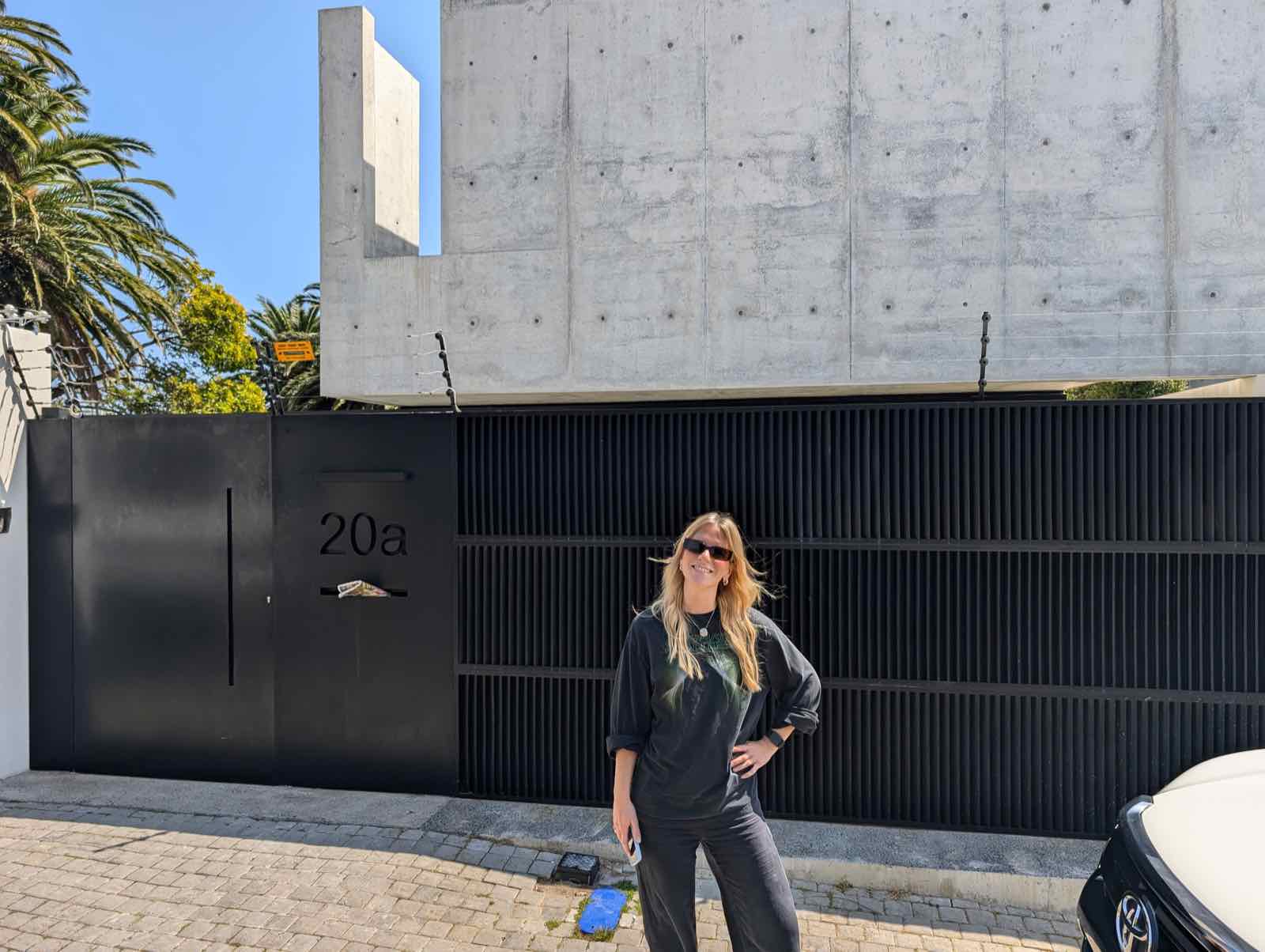
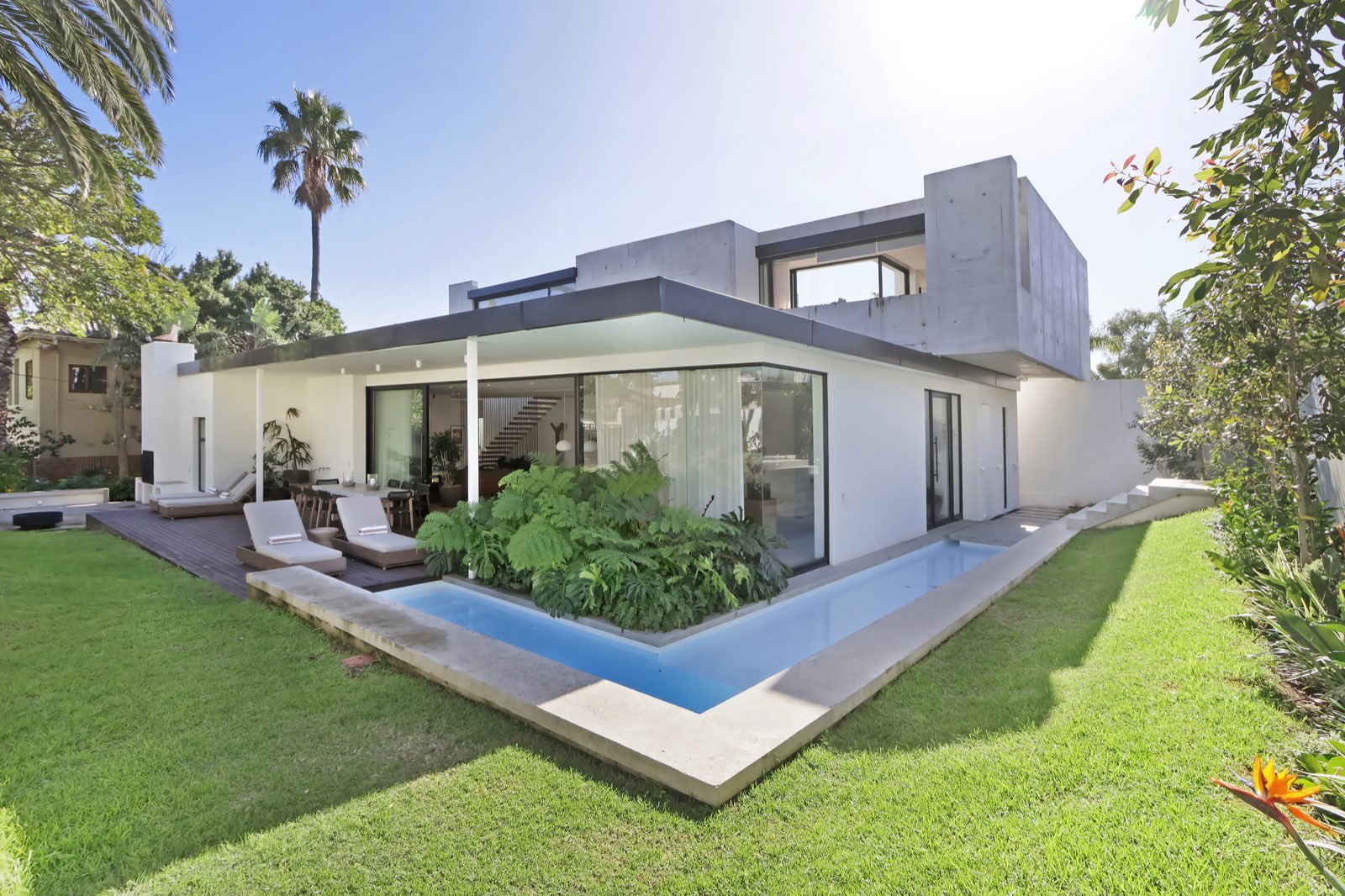
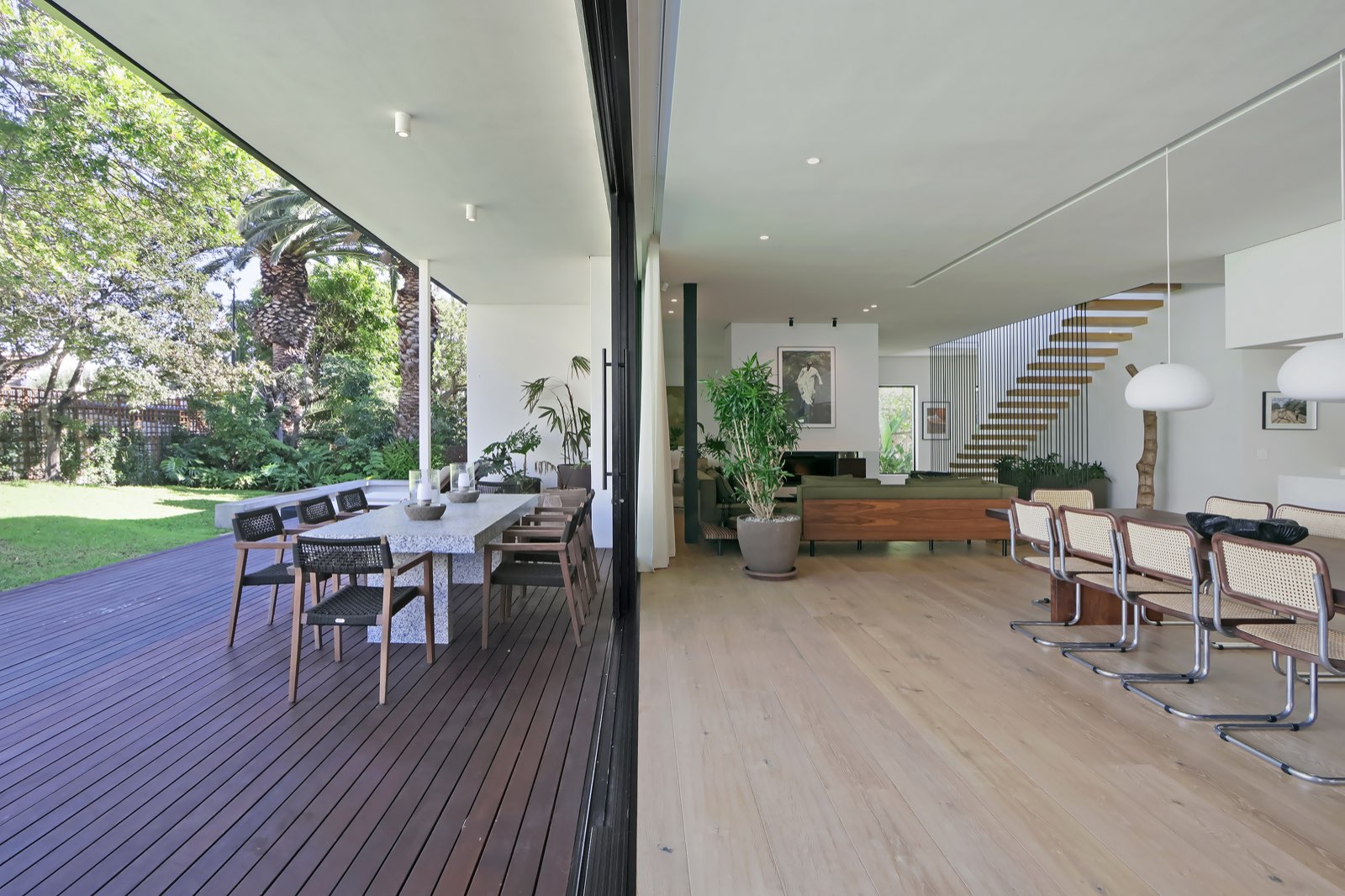
The name says it all. Iliwa means “the rock” in Xhosa—and that’s what we wanted to build: something solid, grounding, permanent. A rock between Lion’s Head and the Atlantic. A foundation for the community and the spaces we keep creating around it.
Casa ILIWA in Fresnaye is the first chapter of something larger. Every generous space, every sheltered corner of the garden, every piece of art on the wall is a deliberate rejection of the default Airbnb aesthetic — smaller rooms, higher margins, interchangeable interiors that erase the neighbourhood around them.
We wanted to build a place where families can spread out, where kids can run in the garden while parents work from the upstairs office, where friends gather for braais under the palms with Lion’s Head glowing at sunset.
The hope is simple: that every guest leaves Casa ILIWA knowing Cape Town has more to offer than the brochures suggest. A rock to return to. A place to slow down, breathe, and feel at home — even if only for a week.
For a small number of guests at a time. Availability by request.